Chapter 8
Organic Chemistry – Some Basic Principles and Techniques
Start with: Organic Chemistry: Chapter IntroductionTopics in this chapter
- 1
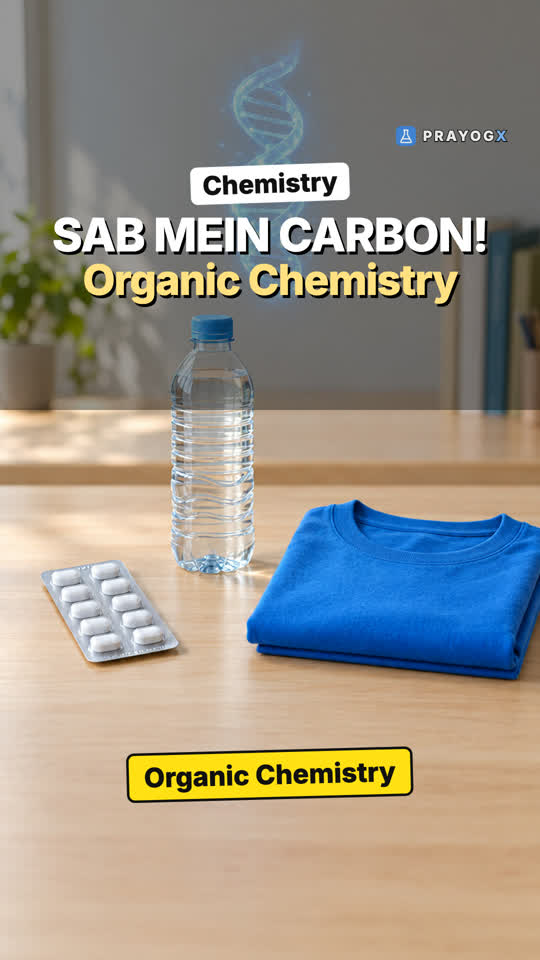 Organic Chemistry: Chapter IntroductionParacetamol, plastic, cotton and DNA share one element: carbon. Why carbon forms millions of compounds, and what this chapter teaches. Watch
- 2
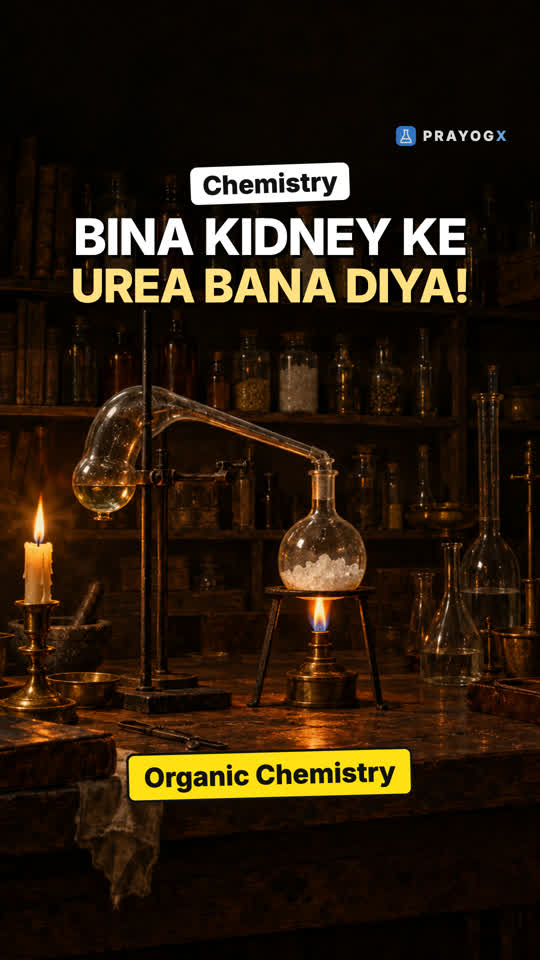 Wöhler's Urea and the End of Vital ForceChemists once believed only living things could make organic compounds. In 1828 Friedrich Wöhler heated an inorganic salt and made urea. Watch
- 3
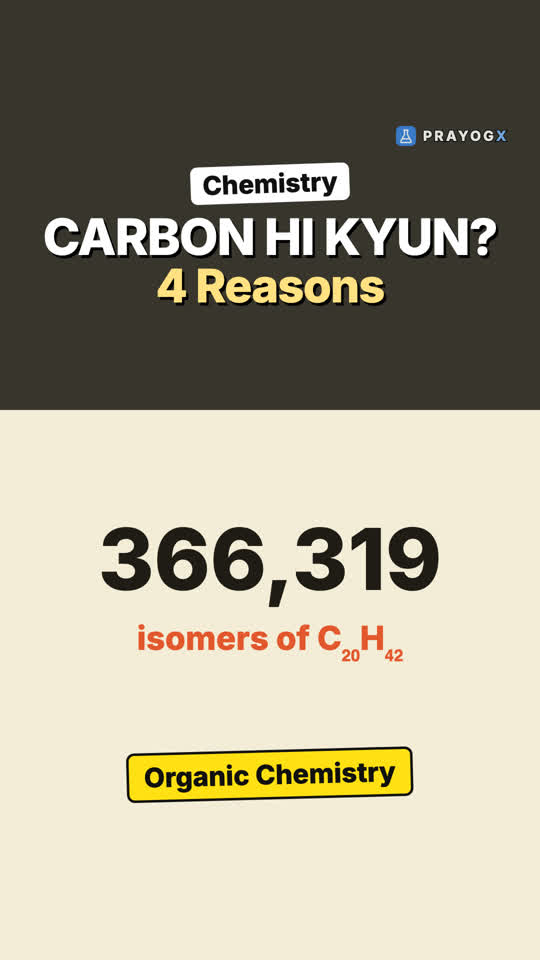 Why Carbon Forms Millions of CompoundsOver 100 elements, yet most known compounds contain carbon. Four reasons, and why silicon can't do the same. Watch
- 4Catenation and tetravalencyComing soon
- 5
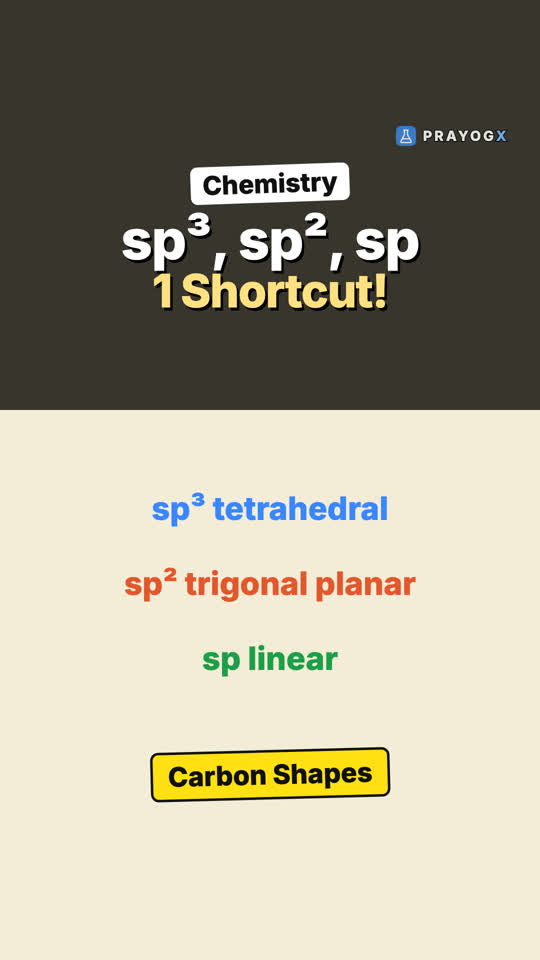 Shapes of Carbon Compounds: sp³, sp², spMethane, ethene and ethyne all contain carbon but have different shapes. Hybridisation, and a quick way to find it. Watch
- 6
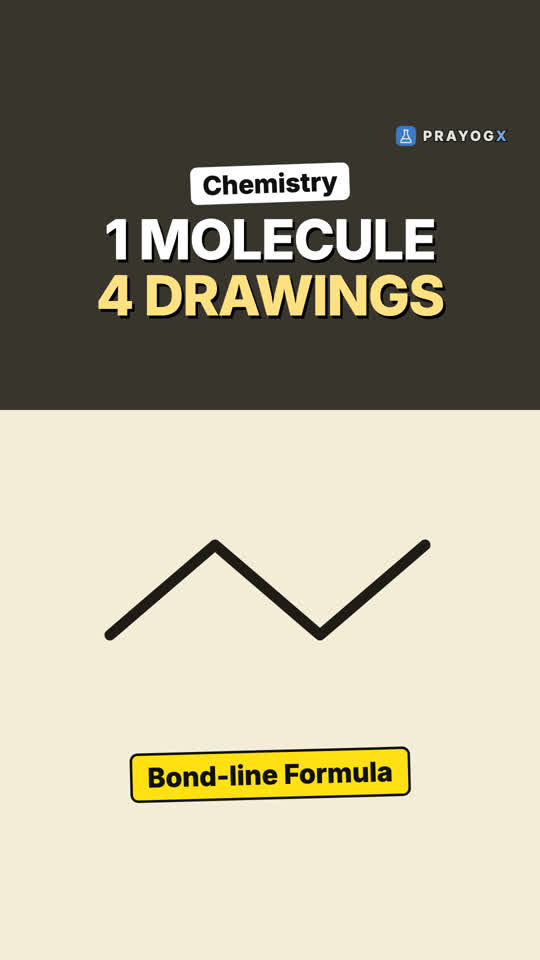 Drawing Organic Molecules: Four WaysOne butane molecule, four ways to write it: complete, condensed, bond-line and 3D. How to read each, and how to count what a zigzag hides. Watch
- 7
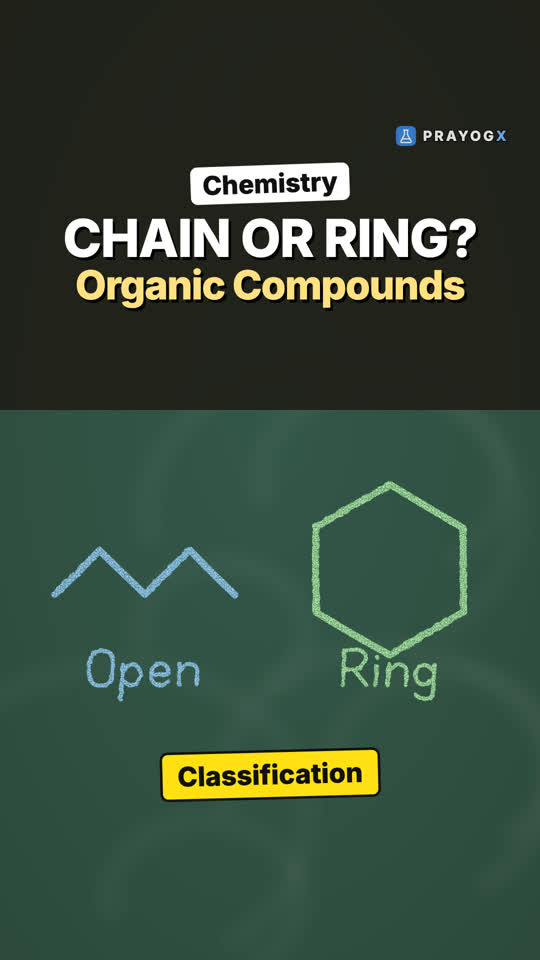 Classifying Organic CompoundsMillions of organic compounds, one first question: is the carbon chain open, or a ring? How to sort compounds into acyclic, alicyclic, aromatic and heterocyclic. Watch
- 8Open-chain versus cyclic compoundsComing soon
- 9
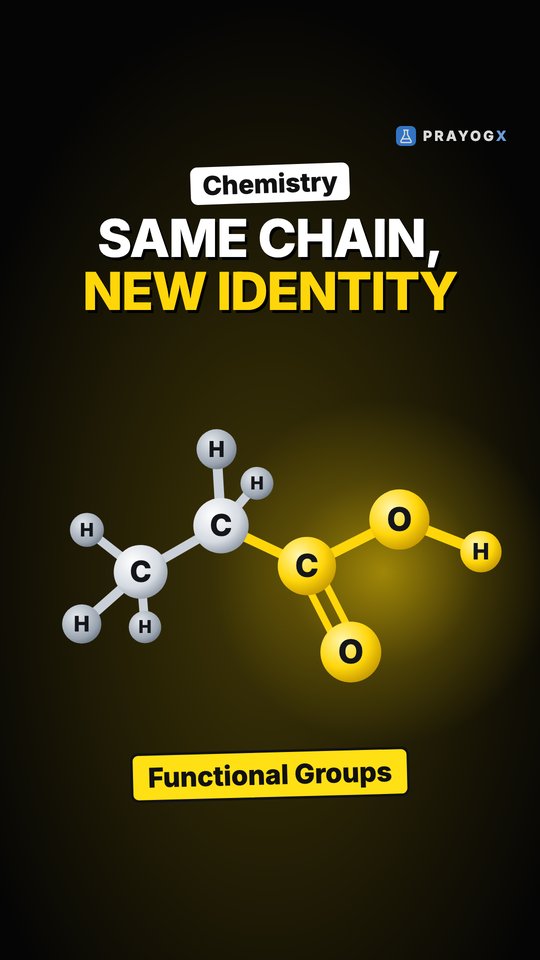 Functional GroupsTwo molecules can share the same carbon chain and still behave differently. How one small group of atoms gives a compound its chemical identity: –OH, –CHO, C=O, –COOH and –NH₂. Watch
- 10
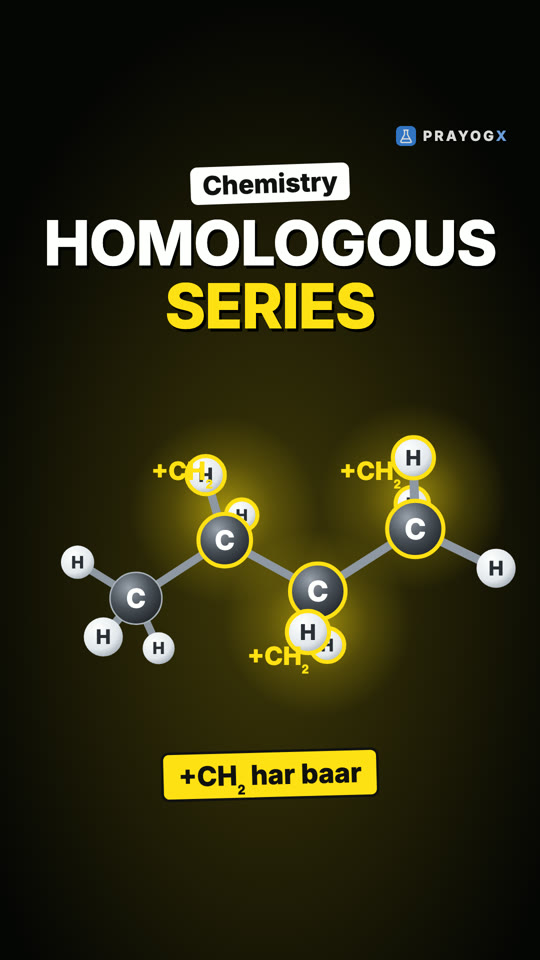 Homologous SeriesMethane, ethane, propane, butane: four different compounds, one family. How each member differs from the next by one CH₂ unit, and what that means for their properties. Watch
- 11
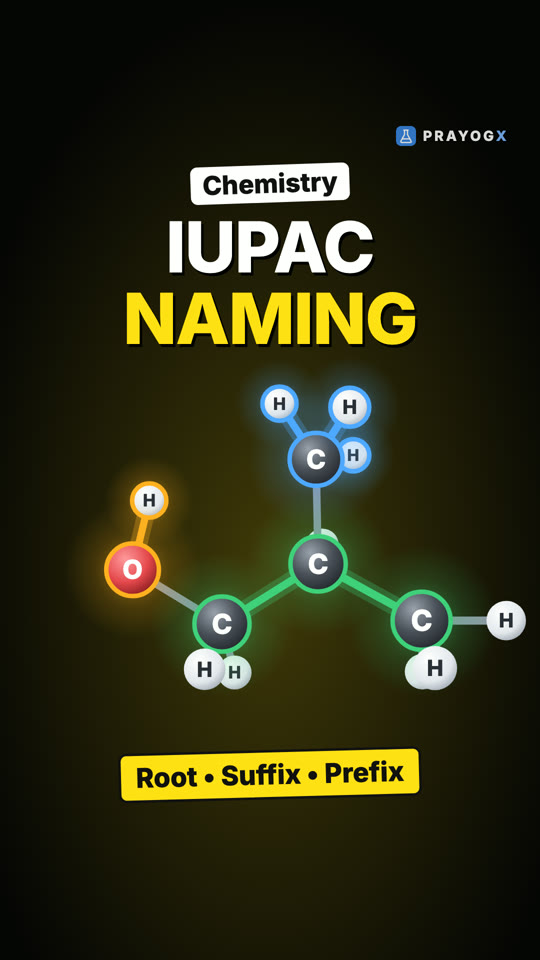 IUPAC Naming: Root, Suffix and PrefixHow a chemical name is built from a molecule: the root counts the parent chain's carbons, the suffix gives its bonds and principal group, and the prefix names what is attached. Watch
- 12Structural isomerismComing soon
- 13Chain, position and functional isomerismComing soon
- 14Inductive effectComing soon
- 15Resonance effectComing soon
- 16Electromeric effectComing soon
- 17Hyperconjugation (introductory)Coming soon
- 18Homolytic versus heterolytic bond fissionComing soon
- 19Free radicals, carbocations and carbanionsComing soon
- 20Electrophiles and nucleophilesComing soon
- 21Substitution, addition, elimination and rearrangementComing soon
- 22Purification by crystallisationComing soon
- 23Distillation and fractional distillationComing soon
- 24Steam distillationComing soon
- 25Differential extractionComing soon
- 26ChromatographyComing soon
- 27Qualitative detection of nitrogen, sulphur and halogens (overview)Coming soon
- 28Quantitative elemental analysis (overview)Coming soon
- 29Why reaction mechanisms use curved arrowsComing soon