Chapter 8 · Chemistry
Wöhler's Urea and the End of Vital Force
Video not playing? YouTube
Chemists once believed only living things could make organic compounds. In 1828 Friedrich Wöhler heated an inorganic salt and made urea.
Download the short notesPDF, 188 KB · solved examples, practice set and answer key Download the workbook
PDF, 182 KB · fill in the blanks, true/false, assertion-reason, MCQ, numericals, short answer, match the columns; detailed solutions at the end Up next in this chapter
 Why Carbon Forms Millions of CompoundsOver 100 elements, yet most known compounds contain carbon. Four reasons, and why silicon can't do the same.Chemistry
Key points
- The vital force theory said organic compounds needed a special power found only in living things. Berzelius supported it.
- In 1828, Friedrich Wöhler heated ammonium cyanate, an inorganic salt, and obtained urea.
- NH₄CNO → NH₂CONH₂: the same atoms in a new arrangement.
- Kolbe made acetic acid (1845) and Berthelot made methane (1856).
- The vital force idea faded gradually, and modern organic chemistry began.
Timeline
| Year | Chemist | Made |
|---|---|---|
| 1828 | Wöhler | Urea |
| 1845 | Kolbe | Acetic acid |
| 1856 | Berthelot | Methane |
Quick quiz
3 questions. Choose an answer for each, then submit to see your score and the explanations.
More from Organic Chemistry – Some Basic Principles and Techniques
 Organic Chemistry: Chapter IntroductionParacetamol, plastic, cotton and DNA share one element: carbon. Why carbon forms millions of compounds, and what this chapter teaches.Chemistry
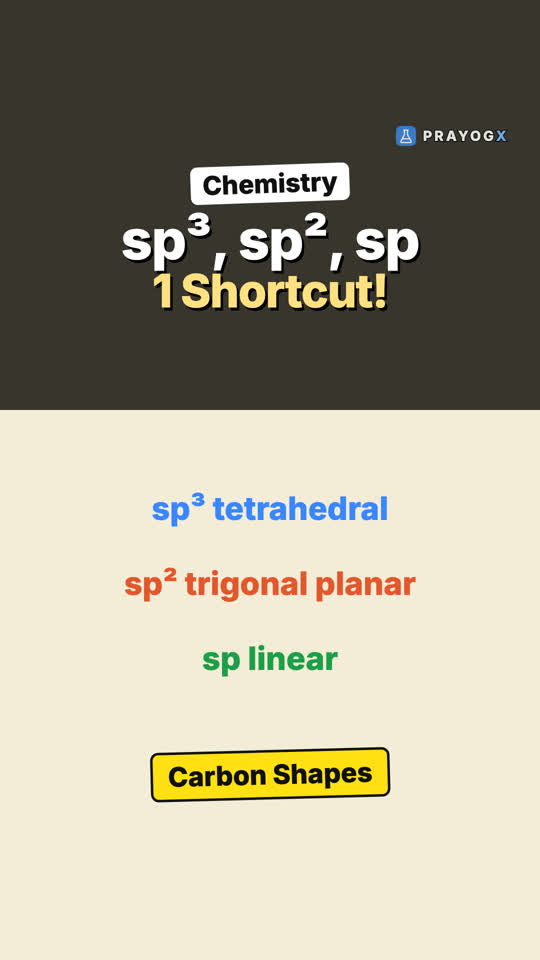 Shapes of Carbon Compounds: sp³, sp², spMethane, ethene and ethyne all contain carbon but have different shapes. Hybridisation, and a quick way to find it.Chemistry · simulation
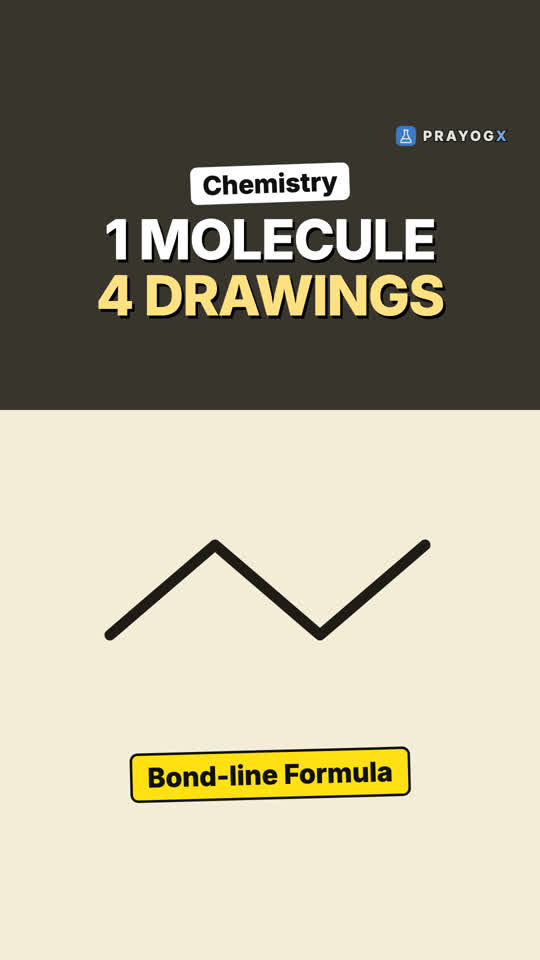 Drawing Organic Molecules: Four WaysOne butane molecule, four ways to write it: complete, condensed, bond-line and 3D. How to read each, and how to count what a zigzag hides.Chemistry · simulation
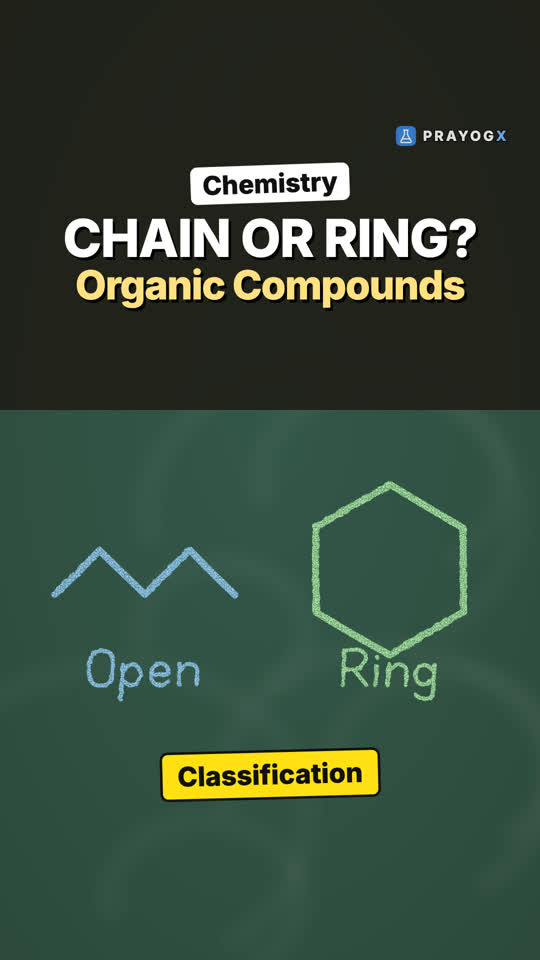 Classifying Organic CompoundsMillions of organic compounds, one first question: is the carbon chain open, or a ring? How to sort compounds into acyclic, alicyclic, aromatic and heterocyclic.Chemistry · simulation
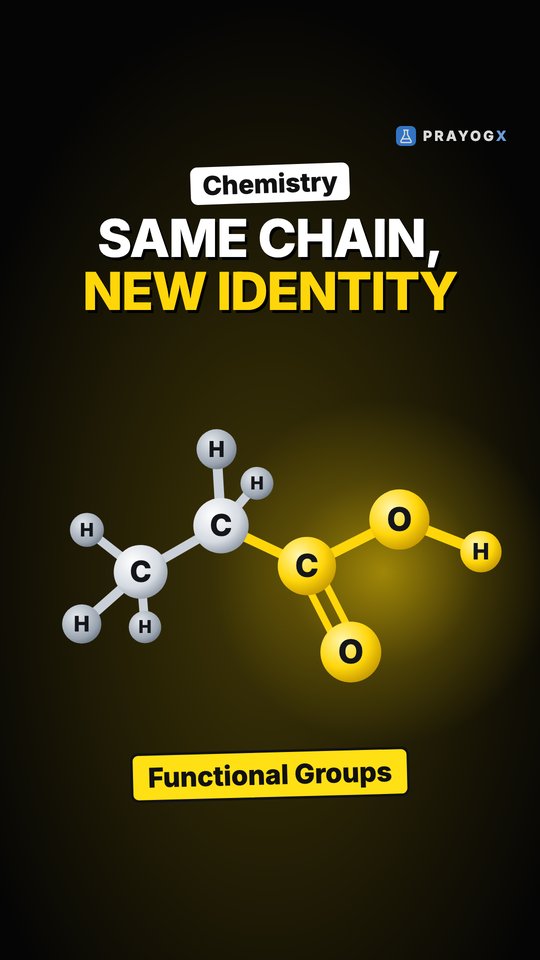 Functional GroupsTwo molecules can share the same carbon chain and still behave differently. How one small group of atoms gives a compound its chemical identity: –OH, –CHO, C=O, –COOH and –NH₂.Chemistry · simulation
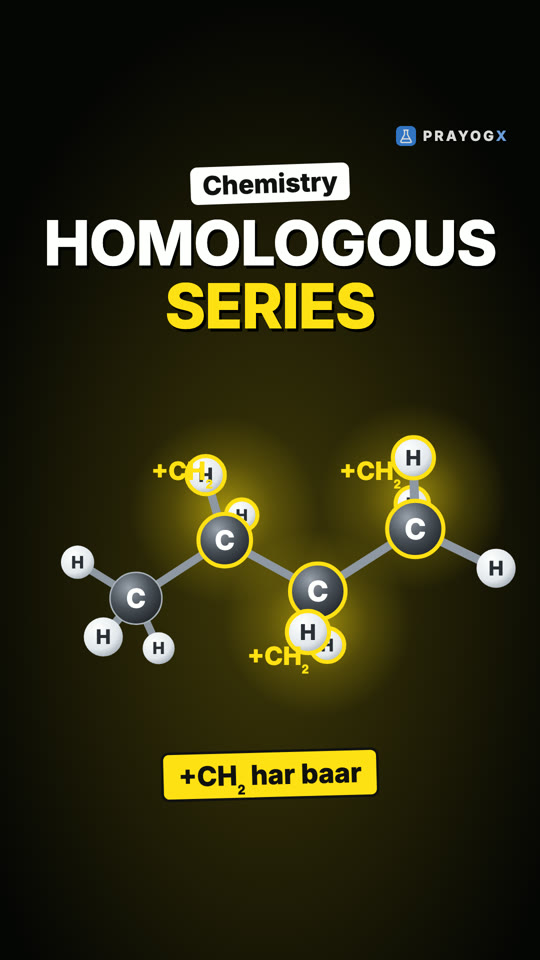 Homologous SeriesMethane, ethane, propane, butane: four different compounds, one family. How each member differs from the next by one CH₂ unit, and what that means for their properties.Chemistry · simulation
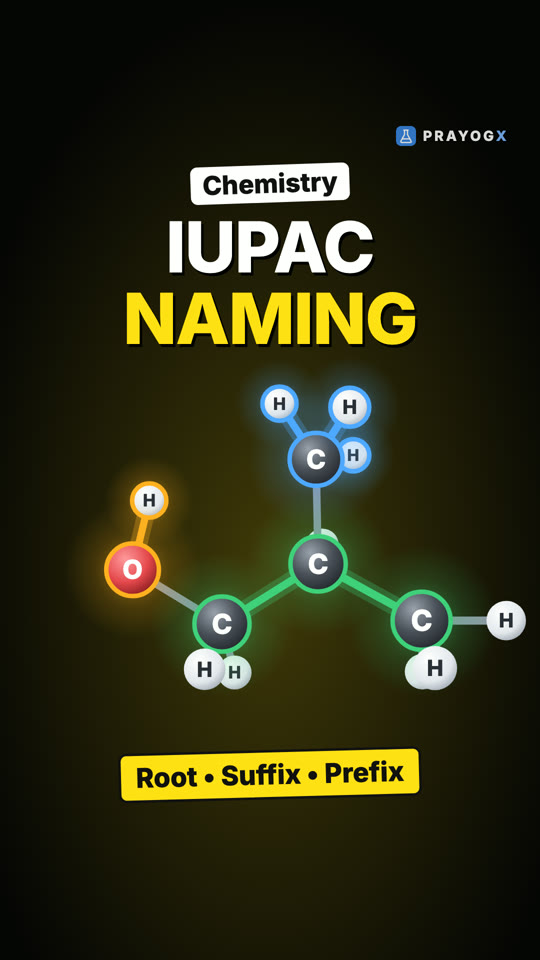 IUPAC Naming: Root, Suffix and PrefixHow a chemical name is built from a molecule: the root counts the parent chain's carbons, the suffix gives its bonds and principal group, and the prefix names what is attached.Chemistry · simulation